Camping La Noria
Heritage15km

Camping Near Tarragona Roman Amphitheatre

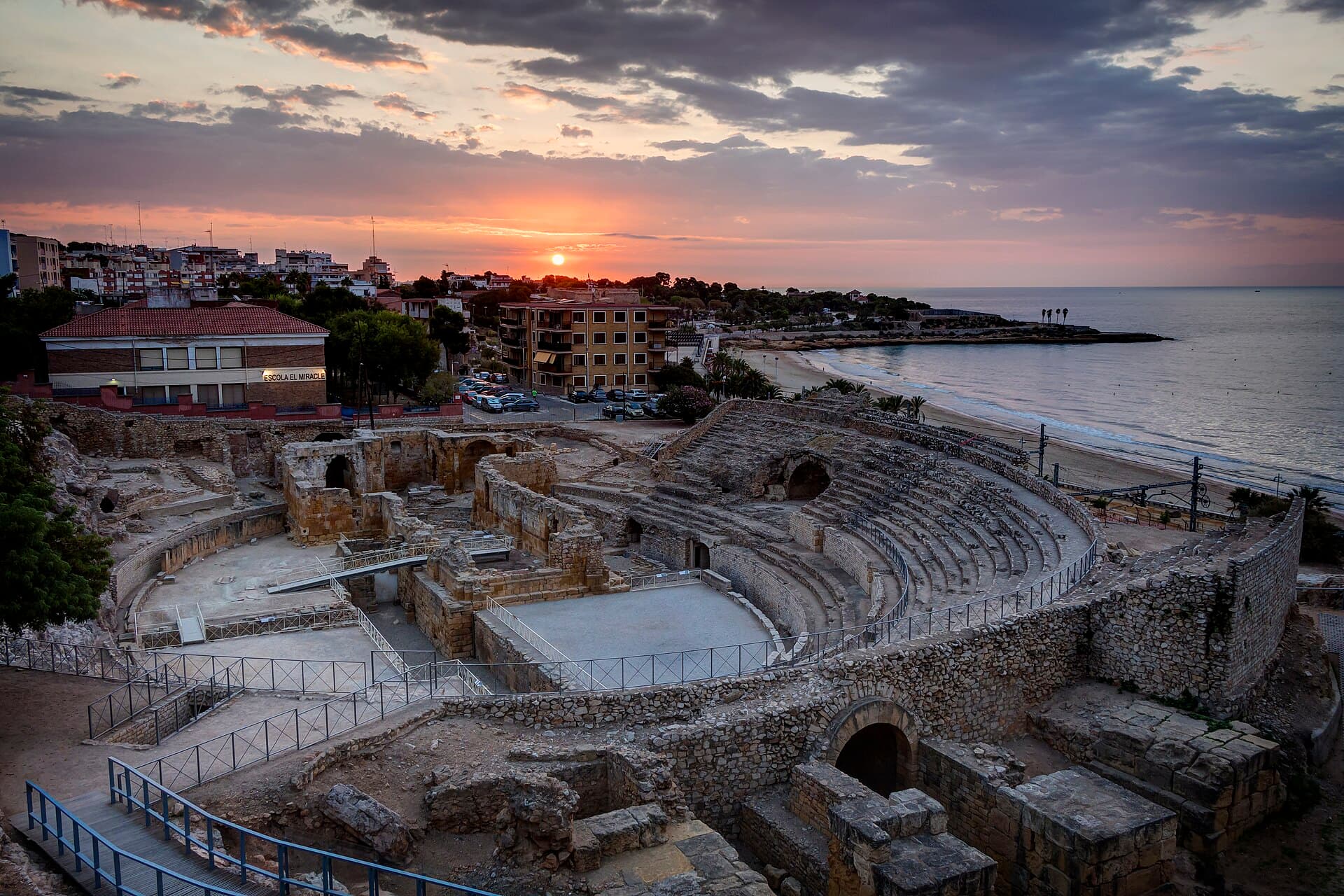
The Roman Amphitheatre of Tarragona stands dramatically above the Mediterranean, a 2nd-century arena where gladiators once fought before crowds of 14,000. As part of the UNESCO World Heritage archaeological ensemble of Tàrraco, it is one of the Costa Dorada's most iconic landmarks — and just 15 kilometres from Camping La Noria.

Tarragona Roman Amphitheatre© Rafa Esteve
Built in the 2nd century AD during the reign of the Roman Empire, the amphitheatre of Tàrraco (modern Tarragona) was carved into the hillside overlooking the sea, giving spectators a stunning Mediterranean backdrop as they watched gladiatorial combat and public spectacles. Today it remains remarkably intact, with most of the seating tiers, the arena floor and the underground passages still visible. What makes this amphitheatre extraordinary is its setting. Unlike Rome's Colosseum, hemmed in by city streets, the Tarragona amphitheatre opens directly onto the sea. Stand in the upper rows and the turquoise water fills the background — it is one of the most photogenic Roman ruins anywhere in the Mediterranean. Within the arena floor, the remains of a 6th-century Visigothic basilica and a 12th-century Romanesque church add layers of history spanning a thousand years. The amphitheatre is part of the broader Tàrraco UNESCO site, which includes the Roman circus, the provincial forum, the colonial forum and the city walls. A combined ticket covers all the city's Roman monuments and represents outstanding value. Audio guides are available in multiple languages and bring the ruins to life with reconstructions and historical narration. The walk from the amphitheatre up through the old town to the cathedral is one of the best urban strolls in Catalonia, passing through narrow medieval streets lined with tapas bars, artisan shops and Roman-era stonework embedded in building facades. Plan to spend at least a half-day exploring the wider archaeological complex. From Camping La Noria, Tarragona is a 15-minute drive south or a short train ride from Torredembarra to Tarragona station. The amphitheatre is a 10-minute walk downhill from the station.

Why Visit Tarragona Roman Amphitheatre

Few Roman ruins combine archaeological significance with such a breathtaking natural setting. Standing in the amphitheatre with the Mediterranean stretching to the horizon connects you viscerally to the ancient world. For families, it is a vivid, open-air history lesson that children find far more engaging than a museum — they can walk where gladiators walked and imagine the roar of the crowd.

How to Get There

Drive 15 km south on the N-340 or take the Rodalies R17 train from Torredembarra to Tarragona (about 12 minutes). From Tarragona station, walk downhill through the Rambla Nova towards the sea — the amphitheatre is signposted and visible from the Balcó del Mediterrani viewpoint.

Train from Torredembarra to Tarragona (15 min)

Best Time to Visit

The amphitheatre is open year-round, typically Tuesday to Sunday. Spring and early autumn offer the most comfortable temperatures for exploring the exposed ruins. Summer mornings before 11:00 are pleasant; midday can be very hot with little shade. During the Tarragona Roman Festival (Tarraco Viva) in May, the amphitheatre hosts re-enactments and live performances.

Tips

  • Buy the combined Tàrraco monuments ticket to visit the amphitheatre, circus, forum and Palaeochristian museum at a discount.
  • Visit early morning for the best light for photographs — the sun illuminates the arena beautifully before 11:00.
  • Combine the visit with lunch in the old town; Carrer Major and Plaça de la Font have excellent tapas restaurants.

Frequently Asked Questions

How far is the Tarragona Roman Amphitheatre from Camping La Noria?

The amphitheatre is approximately 15 km south of Camping La Noria in central Tarragona. You can reach it in about 15 minutes by car or via a short Rodalies R17 train ride.

Is the amphitheatre suitable for children?

Absolutely. Children tend to be fascinated by the arena and the underground passages. There are no difficult climbs, and the open layout lets them explore safely. Audio guides help older children engage with the history.

Explore More Nearby